
The Ski Collectice Vol .02
The Anticipation is Real.
It may be early, but you can feel it - the temperature dropping, the days getting shorter. Ski season is on its way, and for some people, already starting.
There's a specific kind of anticipation that builds when you know the mountains are coming alive. I've been thinking about it since the lifts stopped spinning last spring. When that day finally comes - when you walk through the muddy parking lot, clip into your skis for the first time, and feel that mix of nerves and excitement as the chair carries you up the mountain - everything else fades away. That's the moment.
Whether you're in for the full season or just planning weekend trips, having the right gear makes the difference between frustration and flow. Here is The Ski Collective, Vol 02. Breaking down essentials every skier should have dialed before those first turns.
Ski Prospects for the Season
I could go on page after page talking about skis, but instead, here are my top three skis I have my eyes on.
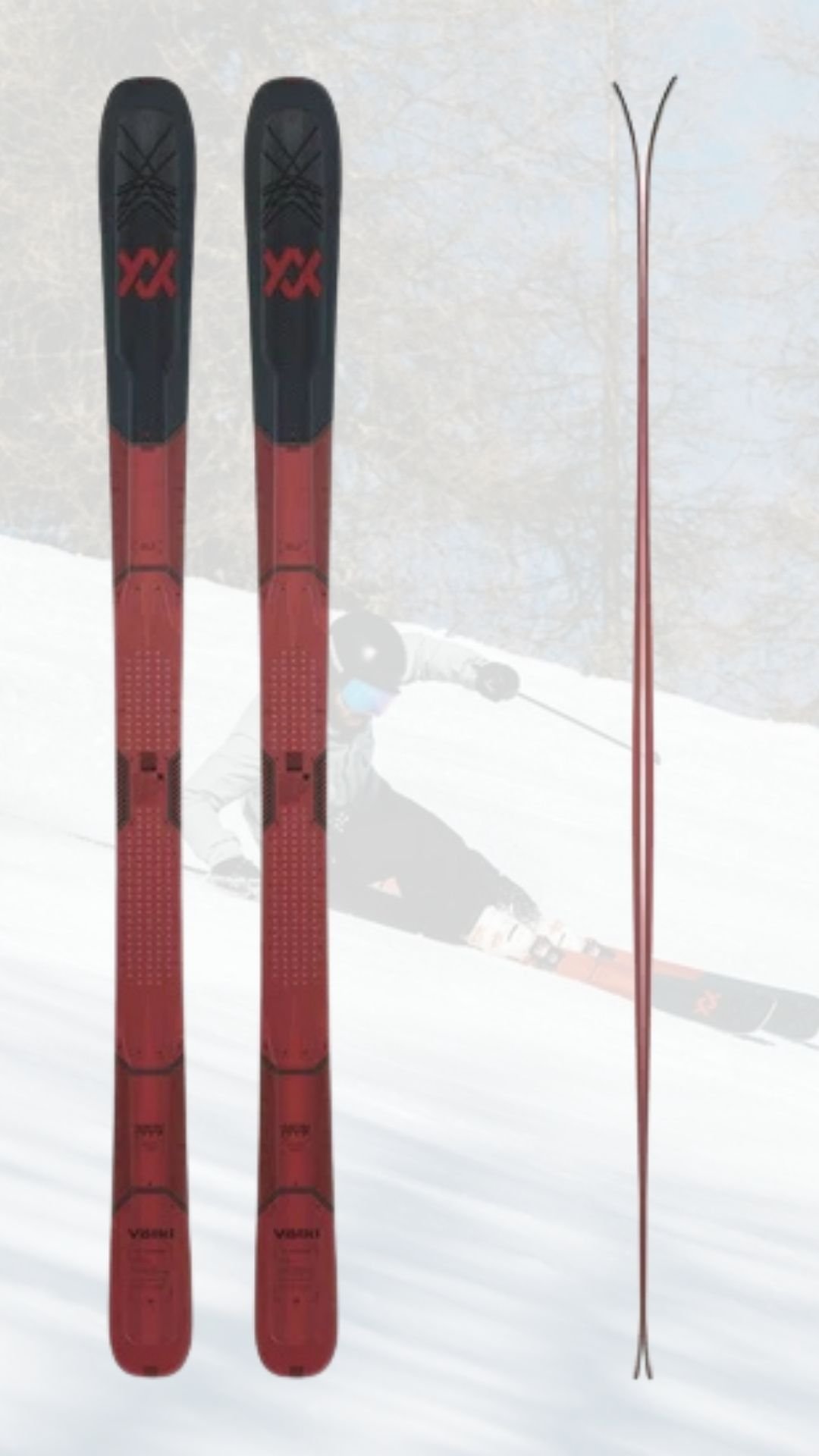
It may take the name of the “dad ski” on the mountain, but I'm interested in giving it a shot because of its legacy as the standard for high-performance all-mountain skis. It’s a ski that is built for those who charge hard, coming alive with speed and responding directly to how aggressively you push it. To put it simply, this ski doesn't do the work for you; it amplifies what you bring.
On groomers, the M7 feels like a rocket. There's that moment in a carved turn where you feel like you're pushing against a solid wall - that's the Mantra. Off-piste, it may not float like a dedicated powder ski, but it charges through variable snow and crud with authority. And let's be honest, that’s typically what we all ski on most of the season.
The trade-off here is playfulness. The Mantra is designed to stay glued to the ground, which means less pop and less room for improvisation compared to skis like the Armada or Rossignol Sender Free 100. This ski was built to hold an edge and power through anything in its path.
It's definitely not the best choice for casual riders, but for those who crave responsiveness, horsepower, and that unmistakable Mantra smoothness, it's worth the commitment.
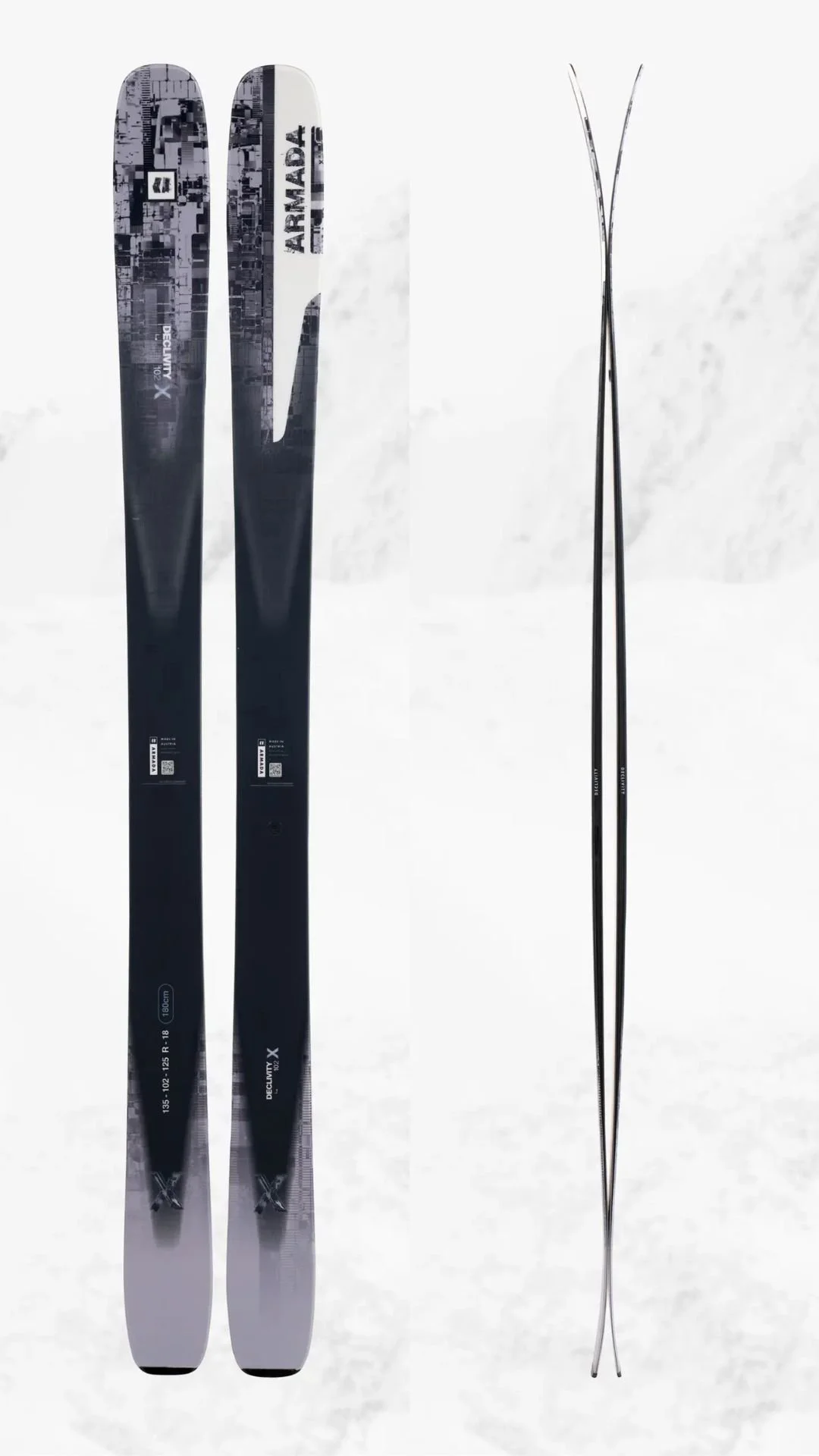
Some of you may have heard that this ski is very underrated or slept on. The Armada Declivity is smooth and surprisingly versatile - This ski can handle crud, chop, and mixed conditions while still ripping groomers. The combination of a wood core with titanal metal laminates delivers responsiveness and pop without feeling overly heavy.
What makes the Declivity interesting is its range. It can go from zero to one hundred in an instant, but it feels equally at home on a mellow day when you're exploring and experimenting. You can carve hard, or you can slash and play around; it adapts to what you're asking it to do.
Armada built its reputation in freestyle skiing and the park, but it's been expanding into the freeride and all-mountain world, and the Declivity has been central to that shift. It's the ski that bridges both worlds. Personally, I have a feeling this one might be the one for me, though I'm not getting ahead of myself yet.

I haven't skied on Rossis since the classic Soul 7’s that completely took over every mountain back in the day. But I have been considering testing the Sender Free 100s, which are Rossignol's answer to the playful all-mountain skier. Unlike its bigger siblings, the Sender Free 110 and 118, this ski prioritizes maneuverability and versatility without sacrificing power. It's built on the same DNA as the wider models but engineered to be quicker through the tight terrain while being more responsive.
The Sender Free 100 rewards a centered, dynamic stance. Drive it through the tips, and you get a solid edge grip. Stay neutral and you unlock its playful side, buttery presses, easy slashes, and quick direction changes. It's a ski that doesn't demand a specific style; it invites you to find your own. On groomers, it rails. In trees, it dances. In variable snow, it just makes everything feel easier. For riders who want one ski that actually does it all, this is the real deal.
The Quiver I Ride
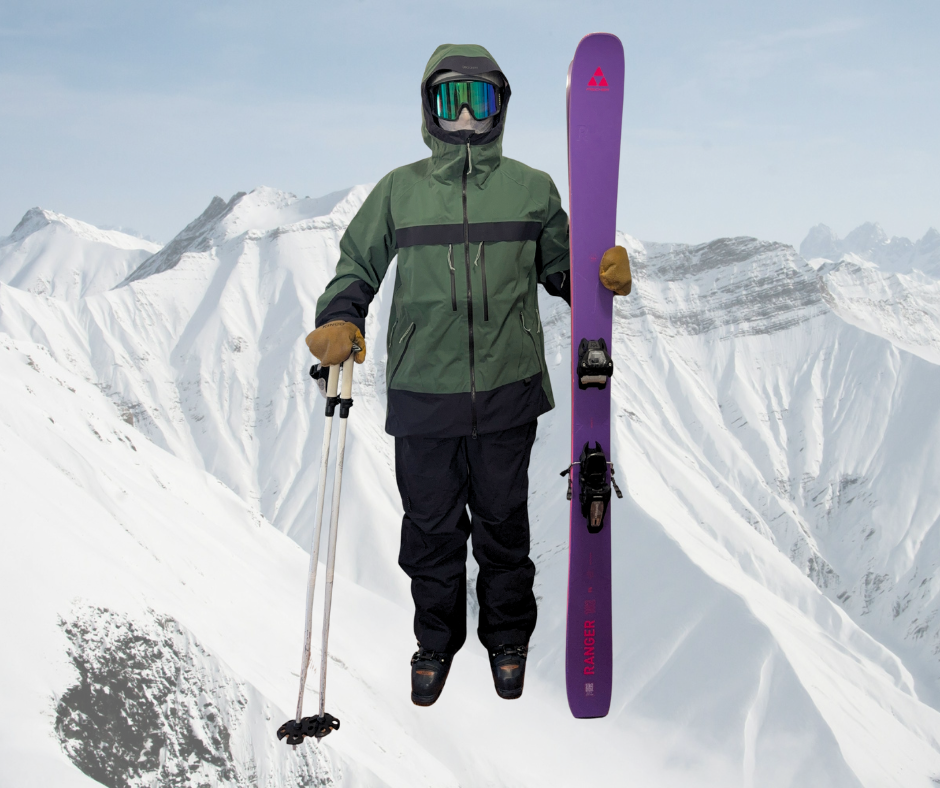
For context, I currently ride the Faction Dancer 3.0 and the Fischer Rangers 102. The Dancer 3.0 is my quiver-killer. I absolutely love this ski. At 106mm, this is my all-mountain freeride ski built with a poplar core, titanal laminates, and a flat tail design that rewards speed and commitment. It excels in crud and variable conditions while still carving with precision on hardpack. The Ranger 102 sits on the more playful end of the spectrum, although I am still figuring out if I love it or not. At 102mm, it's versatile enough for most days. It's nimble in trees, can handle groomers, and doesn't punish you when conditions are soft.
A couple of honorable mentions:
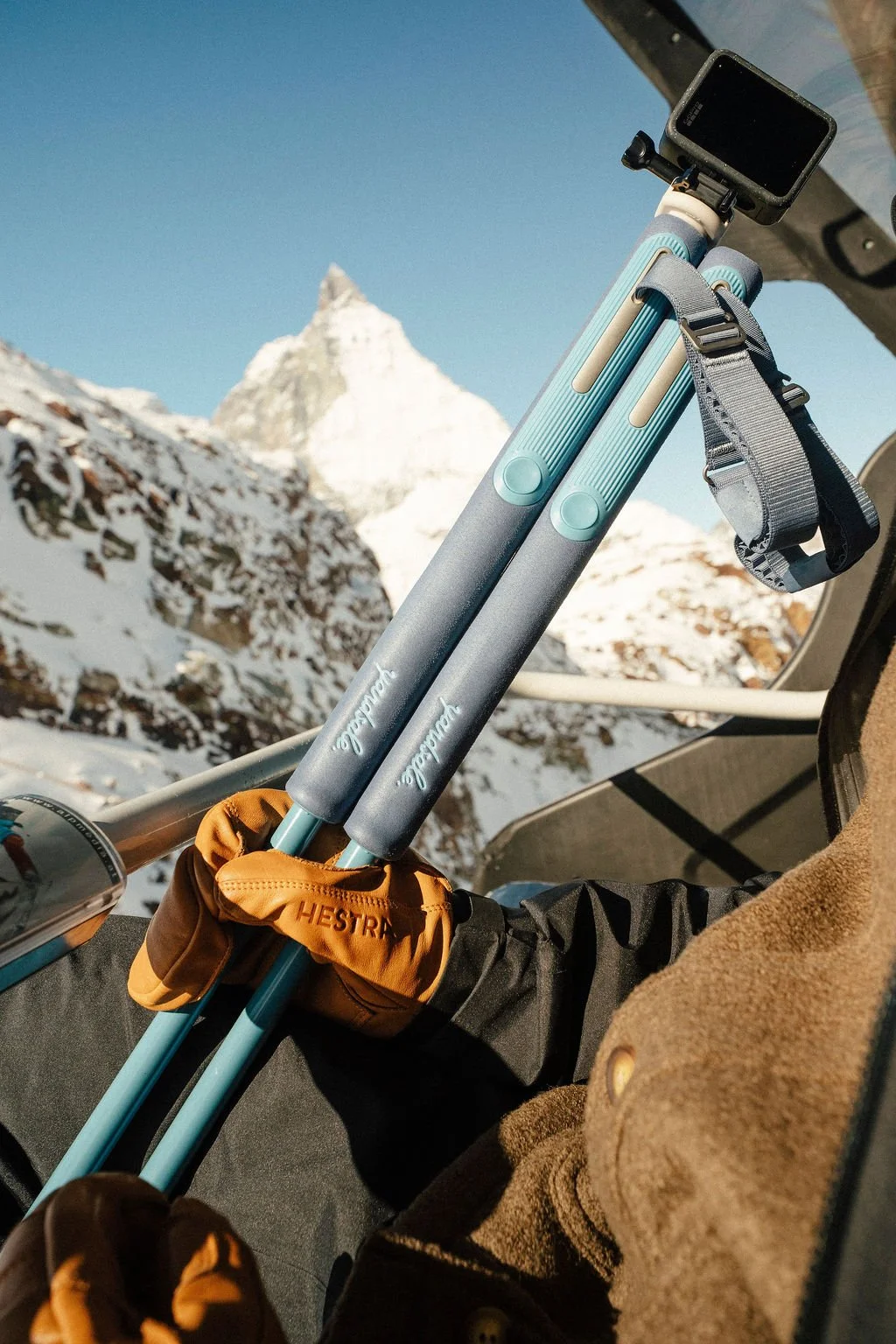
Yardsale has turned the most forgettable piece of gear on the mountain into something you actually think about. Not through gimmicks, but magnets
The P2s come with longer bio-based foam grips built for uphill tours, adjustable length that clicks into place with a button, powder baskets that snap on and off magnetically. Everything connects, everything comes apart. The magnetic system in the handles and baskets makes carrying gear or freeing up a hand effortless.
The modularity is the point. Mix colors, swap baskets. Add a GoPro mount or a bottle opener. Build poles that feel like yours.
They're built to take hits, built with aircraft-grade aluminum that are backed against bends or breaks, and if they do, give yardsale a shout. They'll replace them for free. Lifetime warranty. No questions. Just a good story.
These aren't just poles. They’re what happens when someone actually rethinks the basics.
Outerwear:
Your shell is the border between you and the mountain. When it works, you don't think about it. When it doesn't, it ruins the day.
And enough with the baggy pants and Arc'Teryx shells.
Obermeyer Steibis System
I don’t know if this is just my take, but growing up, I always looked at Obermeyer as a pretty lame outerwear company. Quality was there, but there was no buzz behind the brand. Now, I completely take that back after seeing the Off Grid Collection.
At first glance, I noticed the simplicity behind the design; clean lines, minimal branding, and enough features to get the job done. It's a shell system that doesn't try to be everything. Designed by people who actually spend long days on the mountain. No insulation, no fluff. It moves with you, doesn't fight pack straps, and has a helmet-compatible hood that actually works. Oh, and it's built from recycled ocean waste, which is pretty cool.
Obermeyer created this collection for individuals who know what they want and aren't interested in compromise. It works in heavy snow, wind, and all the variable conditions the mountains throw at us, because it was engineered to do exactly that. Obermeyer has earned my respect with this collection, which is why I'm rocking it this season!
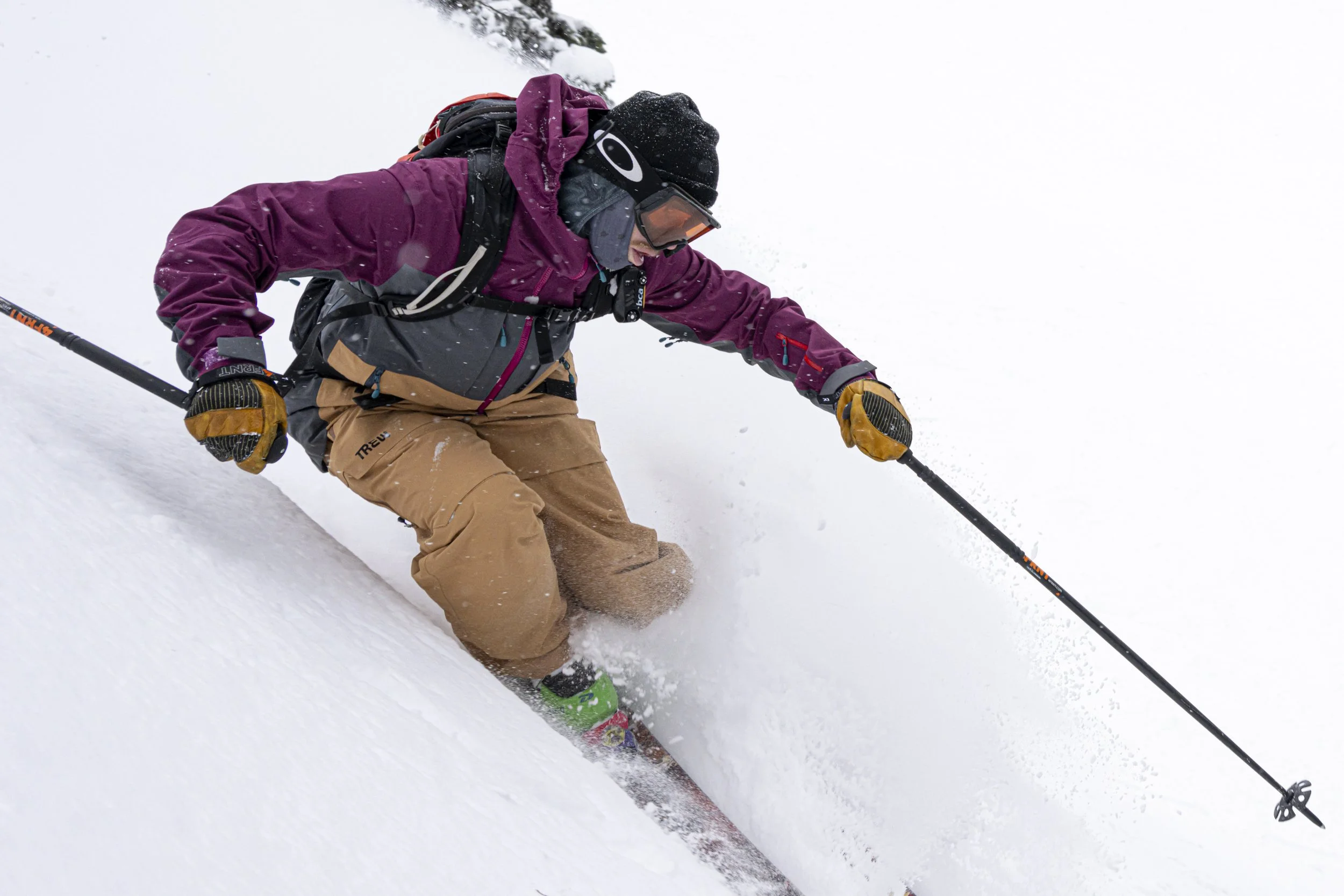
Although Obermeyer has taken the crown this season, I can’t forget to mention Trew.
I love Trew because they actually listen. Most brands talk about feedback, but Trew builds their entire lineup around it. They spent years developing their PNW Primo fabric, a 100% recycled nylon that seamlessly blends performance and sustainability.
The Cosmic jacket and Trewth bibs prove it. Modern freeride fit that's relaxed with room for layering, built so you can actually move. Pockets are exactly where you need them, vents, and just the right amount of fabric stretch. After a full season of abuse on this kit, it held up like it was built to last a decade… cause it was.
Trew’s philosophy is simple: if the gear works in the Pacific Northwest, it will work everywhere else. Their construction is precise, colors are fun and bold, just gear that earns respect through function and style. This is what happens when a company spends a season listening to what works and what doesn't.
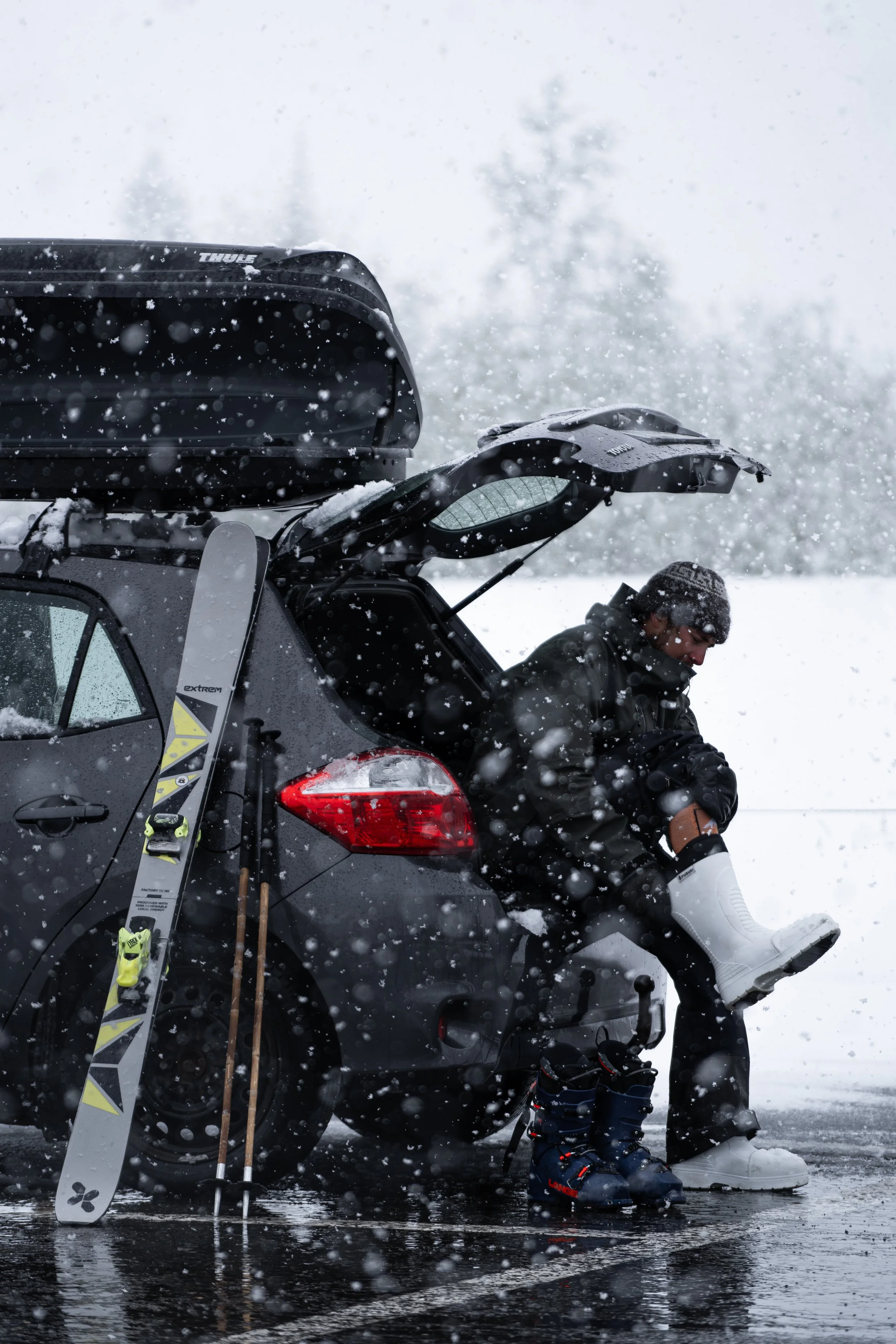
There's a specific moment at the end of a ski day when you slip out of your boots and feel that immediate rush of relief. That's where Fubuki lives. Born from a Swedish designer's time in Japan's snowstorm season, these boots were built for that transition - from peak to apres, from movement to ease.
What makes them stand out is simplicity. No laces, buckles, or excess. Just a seamless shell, durable, lightweight, and minimal. They weigh barely over a pound each, are completely waterproof, and lined with warm fleece that feels like slippers after a hard day on the mountain. The grippy sole keeps you stable on ice and packed snow.
The design respects what matters: function without compromise. Whether you're headed to the apres scene, walking the dog, or stepping out for an evening in town, these boots move with you. Warm enough for a full day outside, light enough to forget you're wearing them. That's the point.
Bags and Travel
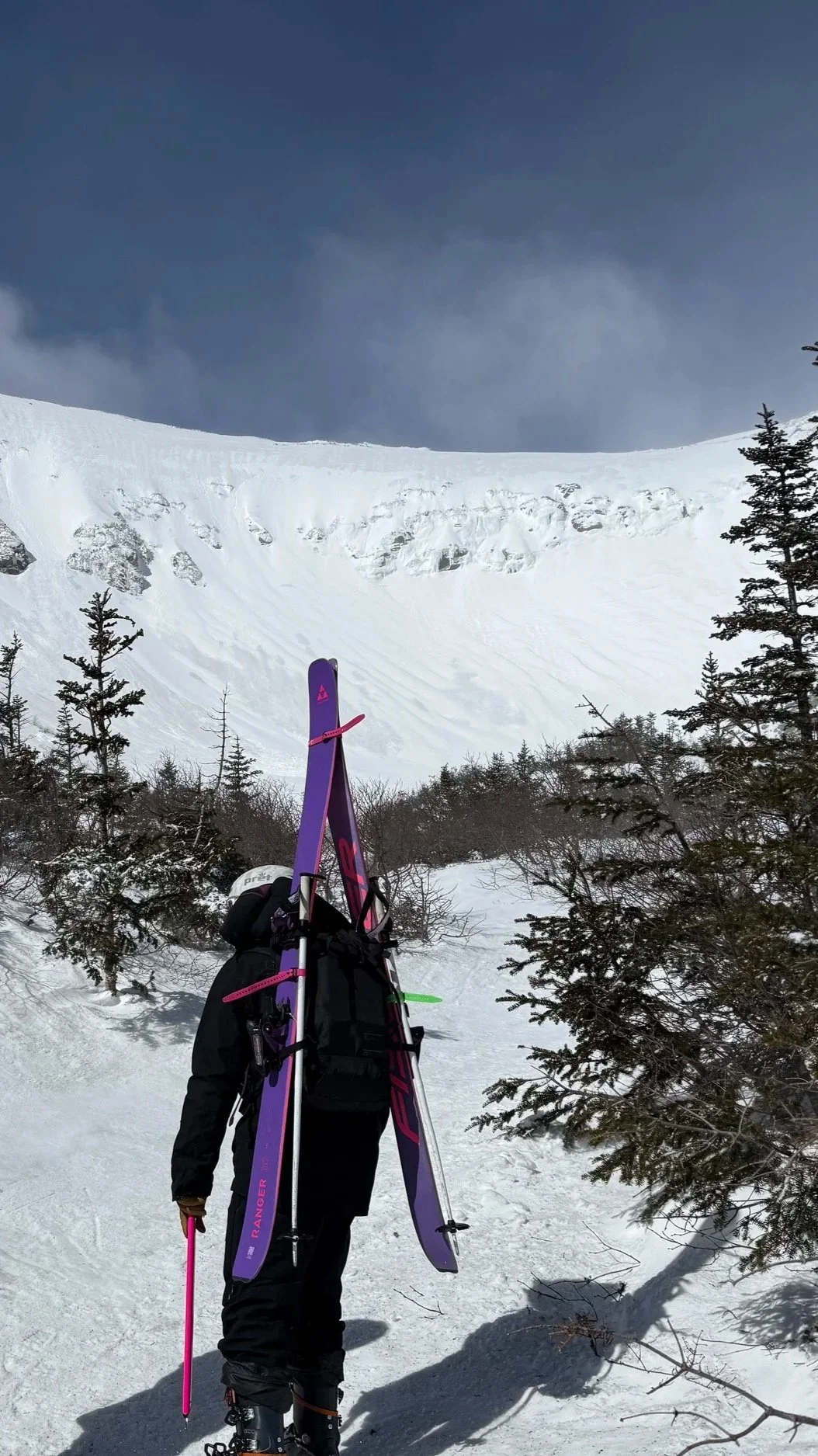
I’ll be honest, I’m biased towards DB. But it's only because they make quality gear that works. This is currently the pack I use, and I love the feel of it. It has a roll-top design for when you need that extra space, and when you don't, it can be compressed down. It fits all your essentials – beacon, shovel, probe – with space left over for extra layers, water, and whatever else. The main compartment is opened from the back panel, so when you're mid-hike hike you don't need to battle your A-frame or board on the back.
The main feature I look for in a ski pack is a dedicated external avalanche compartment. For quick access when seconds matter and to keep your safety gear separate from everything else. My only gripe about this pack. No dedicated helmet compartment, when you're hiking a decent distance, your helmet ends up strapped to the outside, or eating up your interior space. Not a deal breaker, but definitely something to consider.
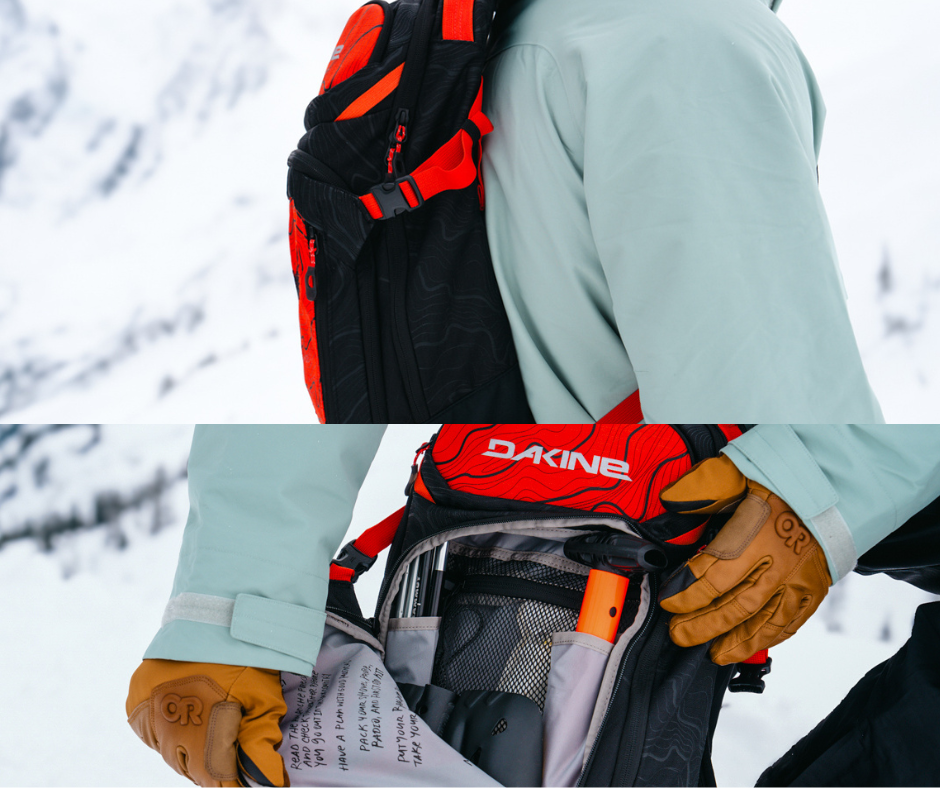
This is a classic. Ask around any ski town, and you’ll find the heli pro is a favorite. And there's a reason why. It's iconic, it does exactly what it’s supposed to do without any extra features. At only 20L, it has room for only the essentials, and that's the point. You can’t carry unnecessary weight with this pack because there is no room for it.
The Heli Pro has purpose-built snow tool sleeves with external shovel blade carry, a goggle pocket, and an exterior quick stash pocket. With either the A-frame or diagonal ski carry, and the vertical board carry. This pack may not be the most feature-rich rich but it serves its purpose, it’s reliable, and it’s affordable.
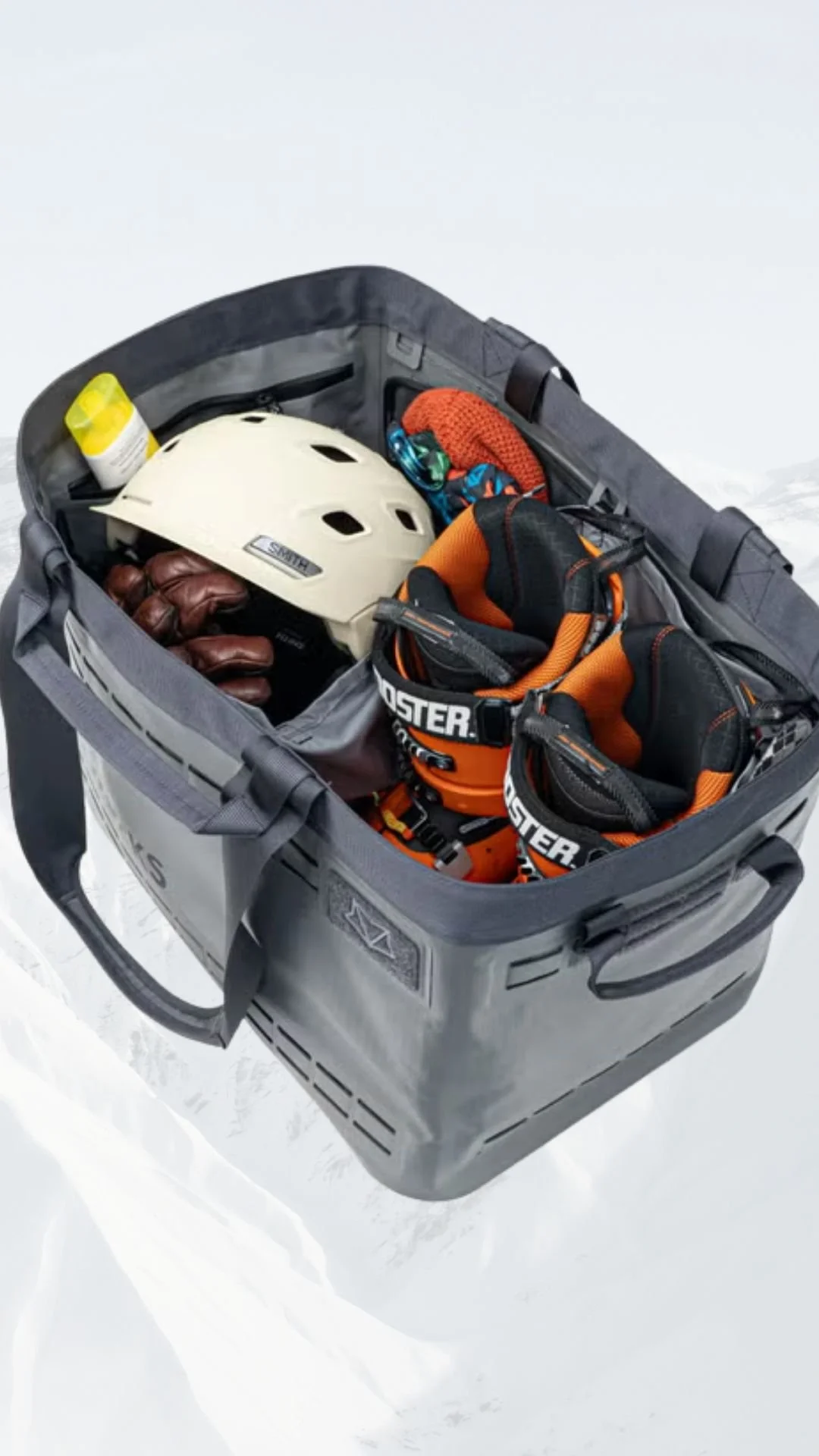
Here's the thing nobody talks about: half the battle of skiing isn’t on the mountain. It’s getting out the door with everything you need, without digging through 3 bags in the parking lot.
I recently came across the Kit Works gear tote, which completely fixes that. It is not just a bag–it's a system. And that distinction matters.
Over-constructed, in the best way, ultra-durable and waterproof shell. It has a wide mouth opening that stands upright on its own, so you can see everything at a glance instead of digging blindly through an old duffel bag. I’ll focus specifically on the ski bundle they offer, which comes with medium mesh pockets for gloves and hats, a large flap pocket for small items, a large gear cube for tools and waxes, and a medium wet/dirty gear bag to keep snowmelt where it belongs.
What I love about Kitworks so much is the modularity behind the design. Internal and external accessory rails let you add or remove pockets and cubes based on what you’re carrying that day. Ski bag one weekend, mountain bike kit the next. A system that moves with you.
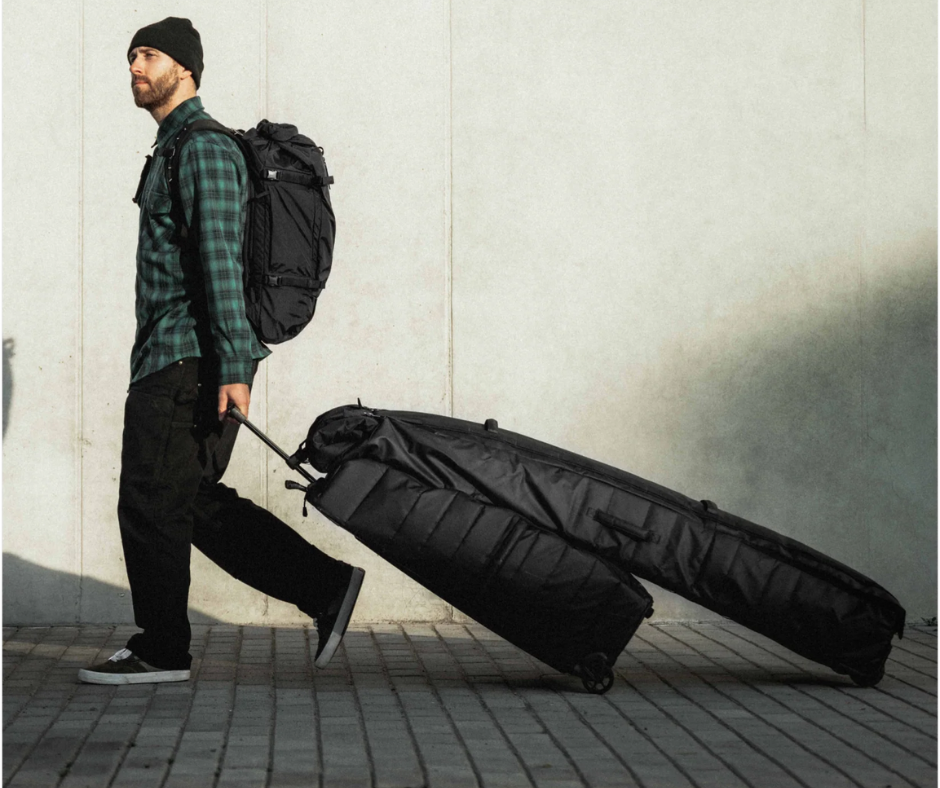
When we are traveling in general, we hope our checked bag shows up at the carousel. But hope isn't a great strategy.
I would say traveling with any sort of gear makes this 10x more nerve-racking. Here are two good rules I follow when flying with ski gear: never check your boots. Get everything else in one checked bag.
I know lugging boots through the airport sounds inconvenient, until you land in Denver and your bag is still at Chicago Midway. Now you have to rent boots… trip ruined.
This is where the DB Snow Roller Pro 127L earns its place. It holds skis up to 203cm, your helmet, outerwear, and everything else you need for your trip. The bag uses DB’s patented Rib-cage construction to protect gear without the added weight of traditional padding. The whole bag is also length-adjustable, which keeps everything tight and rigid for safe transport.
Your boots stay with you in a carry-on, which I currently use the DB Hugger and am open to suggestions. When you arrive, you’ve got what matters most, and the rest is waiting for you at baggage claim–protected, organized, ready to go
All the prep, all the gear, all the anticipation–it comes down to one moment. Those first turns of the season when your body quickly remembers the rhythm, then everything else disappears. That’s what we’re all chasing.
Not the next ski or the most flashy kit, but the feeling of being exactly where we’re supposed to be.
The mountains don’t care what you're wearing or what's in your pack, but having gear you trust means you’re not thinking about it. You’re just skiing. That's the difference. When your kit works, you’re able to focus on that moment.
Thanks for checking Peak Life out! The only way to support it is to subscribe to the newsletter and follow us on instagram @Peaklifeco_
